
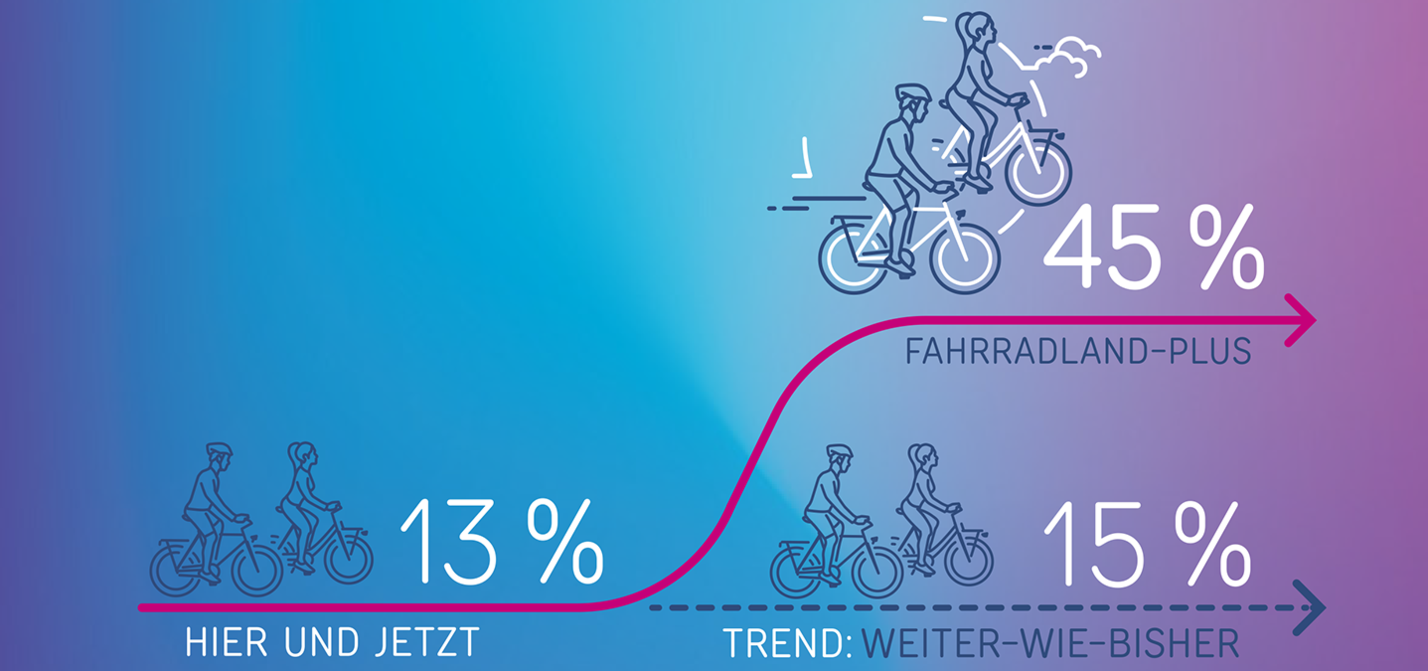
ADFC Future Strategy 2030: Making Germany a Cycling Nation Plus
In its future strategy, the ADFC has defined what it aims to achieve politically and in society. The organisation has now evaluated its goals, documented its successes, and extended its strategy to 2030.
The ADFC is an organisation for people in Germany who cycle, love cycling, want to cycle, or support cycling. As the world's largest cycling association by membership, the ADFC is a powerful advocate and a strong specialised, community-oriented organisation.
In its expanded Future Strategy 2030, the association outlines its socio-political goals and additionally defines structural objectives in the areas of organisational development, communications, financial resources and digitalisation as well as around consumer advice, technology, and legal affairs.
The Three Pillars of the ADFC
The ADFC is based on three pillars: the first is its political, technical, and social impact. The second is the provision of reliable organisational and participatory structures, and the third encompasses the services and offerings of the ADFC.
All of the ADFC's activities aim towards human-centred, safe, sustainable and healthy mobility — with cycling at the heart of an efficient mobility system that meets the needs of all people. Through its activities, the ADFC also aims to make the transport sector climate-neutral by 2045.
Progress Made
Since the adoption of the Future Strategy in 2022, the ADFC has already reached a number of the goals it set for itself: for example, it has established the Young ADFC as its youth organisation and successfully advocated for the reform of the German Road Traffic Act.
The challenge now is to maintain our position: under tight public budgets and growing polarisation at the political fringes, but also against the anti-democratic rise of reactionary political actors who misuse transport policy and climate protection as a 'culture war'.
Strengthening Our Foundation and Pursuing Our Goals with Determination
This is precisely why the ADFC wants to strengthen its strong, membership-based foundation today, deliberately assuming its place as an active participant in a democratic society. It also aims to heighten its goals for cycling and for the people in the future cycling nation of Germany — so that it can pursue these goals with clarity and determination.


